Unleashing Creative Potential with Versatile Brush, Grungy Brush, and Ink Brush Strokes Assets
In the rapidly evolving landscape of digital design, the texture and authenticity of a visual element often determine its impact. Designers, illustrators, and content creators are constantly seeking tools that bridge the gap between traditional artistry and modern efficiency. Among the most sought-after resources are high-quality Brush, Grungy Brush, and Ink Brush Strokes. These elements provide the organic imperfection and dynamic energy that vector shapes alone often lack. By integrating these assets into your workflow, you can elevate projects ranging from corporate branding to personal craft endeavors, ensuring a unique aesthetic that resonates with audiences across various media.
The Distinctive Character of Organic Stroke Variations
Understanding the specific characteristics of different stroke types is essential for selecting the right tool for your project. A standard Brush asset typically offers clean, fluid lines that mimic natural hair or synthetic bristles. These are ideal for creating smooth transitions, calligraphy, and foundational illustrations where clarity is paramount. However, design often requires more than just clean lines; it demands personality and history.
This is where the Grungy Brush becomes indispensable. Grunge textures introduce noise, wear, and tear into the visual composition. They simulate the effect of dry ink, rough paper, or weathered surfaces. When applied to a design, a grungy stroke adds depth and a tactile quality that flat colors cannot achieve. It suggests age, resilience, or an urban edge, making it a favorite for poster designs, music album covers, and streetwear branding.
Conversely, Ink Brush Strokes capture the high-contrast drama of traditional sumi-e or calligraphy. These strokes vary significantly in thickness within a single movement, showcasing the pressure and speed of the artist's hand. They convey urgency, elegance, and artistic flair. Whether used as a standalone graphic element or as a background accent, ink strokes bring a sense of motion and human touch to digital canvases, breaking the monotony of pixel-perfect geometry.
Maximizing Utility Through Multi-Format Compatibility
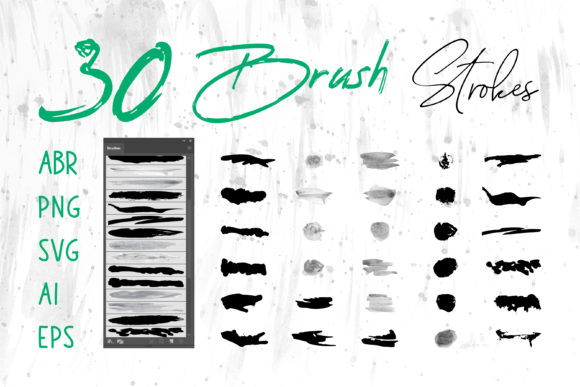
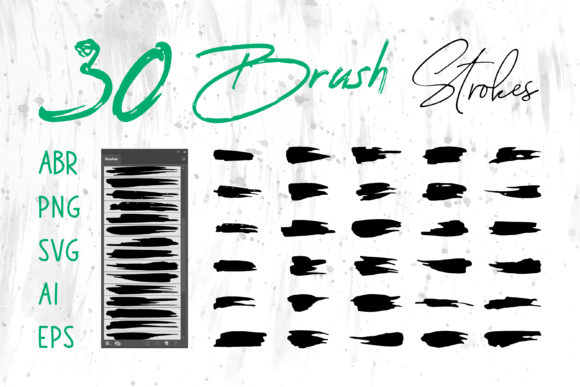
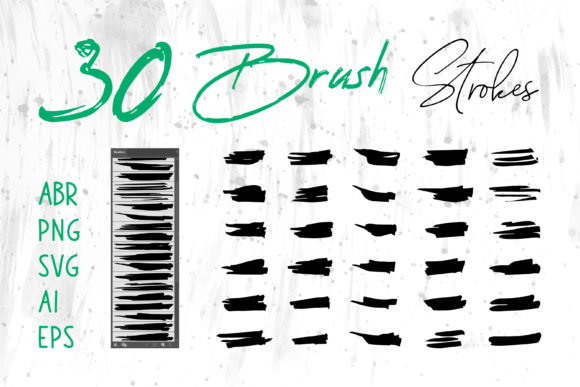
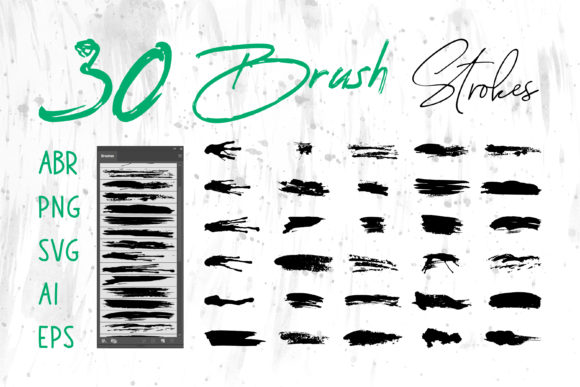
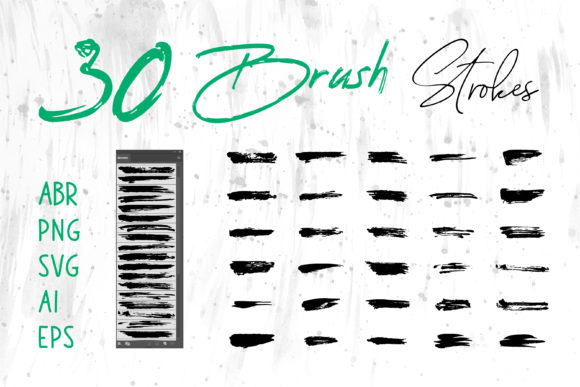
One of the most significant challenges in digital asset management is compatibility. A designer might work primarily in Adobe Photoshop but need to hand off files to a colleague using Adobe Illustrator or a client who only has access to MS Word. The true value of a comprehensive brush stroke collection lies in its format diversity. Receiving files in ABR, Photoshop, ProCreate, PNG, SVG, AI, and EPS ensures that these creative tools are accessible regardless of the software ecosystem you inhabit.
For raster-based workflows, the ABR (Adobe Brush) format is the gold standard. It allows users to paint directly onto the canvas in Adobe Photoshop, maintaining the dynamic pressure sensitivity of their stylus. Similarly, ProCreate brushes empower iPad artists to create on the go with the same textural fidelity. These formats are perfect for painting, masking, and adding organic details to photographs or digital paintings.
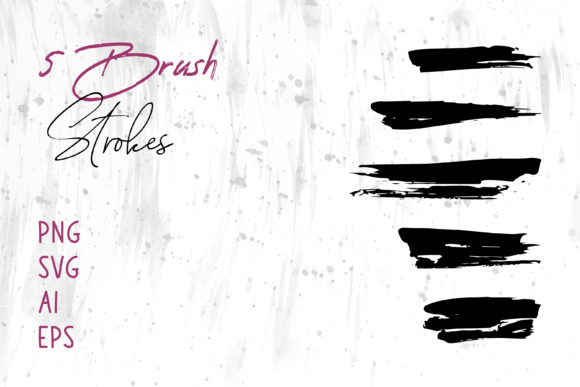
However, scalability is often a requirement for large-format printing or logo design. This is where vector formats like AI (Adobe Illustrator), EPS, and SVG shine. Unlike raster images, vectors are mathematically defined paths that can be scaled infinitely without losing resolution. Having your Ink Brush Strokes available as vectors means you can resize a logo for a business card or a billboard without any pixelation. Furthermore, the inclusion of PNG files with transparent backgrounds provides an immediate "drag-and-drop" solution for users who may not have advanced design software, allowing for quick integration into presentations or web layouts.
Cross-Platform Application in Professional and Consumer Software
The versatility of these assets extends far beyond professional design suites. While Adobe Creative Cloud applications like Adobe Illustrator, Adobe Photoshop, and Adobe Indesign offer the deepest level of control, the utility of these brushes reaches into everyday productivity software. Business owners and educators often rely on MS Powerpoint and MS Word to create engaging visual communications.
By utilizing the included PNG or SVG files, a user can easily insert a Grungy Brush accent into a PowerPoint slide to break up text-heavy sections or add a stylish header to a Word document report. This capability democratizes high-end design, allowing non-designers to produce polished, professional-looking materials. For instance, a teacher creating a history lesson plan can use ink strokes to frame key dates, giving the material a historical and authentic feel. Similarly, a small business owner can enhance their internal newsletters or client proposals with subtle textural elements that reinforce brand identity without needing to hire a graphic designer for every minor update.
Diverse Use Cases Across Industries and Projects
The application of Brush, Grungy Brush, and Ink Brush Strokes spans a vast array of industries. In the realm of T-Shirt design and apparel, these elements are foundational. Streetwear brands frequently utilize grungy textures to convey a rebellious spirit, while yoga or wellness brands might prefer the flowing elegance of ink strokes. The ability to manipulate these strokes in vector formats ensures that the print quality remains crisp on fabric, regardless of the garment size.
Packaging design is another critical area where these assets add value. In a crowded marketplace, product packaging must stand out. A coffee bag featuring a bold, hand-drawn ink stroke logo suggests artisanal quality and care. Conversely, a tech product box might use subtle grunge textures to imply durability and ruggedness. The tactile suggestion provided by these graphics influences consumer perception before the product is even touched.
For Book Cover designers, typography combined with brush strokes creates immediate genre signaling. Thrillers often benefit from jagged, aggressive ink splatters, while romance or literary fiction might utilize softer, more fluid brush lines. The emotional resonance of the stroke type helps potential readers connect with the story's tone instantly.
In the digital sphere, Website headers and Social Media Banner graphics rely heavily on unique visuals to capture attention in a scrolling feed. A static, corporate banner often gets ignored, but one featuring dynamic Ink Brush Strokes creates a focal point that encourages engagement. Digital marketers can use these assets to create cohesive campaign visuals that look custom-made rather than templated.
Beyond commercial applications, these tools are invaluable for Craft Projects and Digital Scrapbooks. Hobbyists who enjoy digital planning or memory keeping can use these strokes to frame photos, create journaling cards, or design custom stickers. The Card making community, both physical and digital, benefits immensely from the ability to layer textures that mimic real-world materials like watercolor paper or dried ink.
Strategic Implementation for Logo and Brand Identity
Creating a Logo is perhaps the most demanding task for these assets. A logo must be distinctive, memorable, and versatile. Using a custom Brush stroke can give a brand a signature look that separates it from competitors using generic geometric icons. However, the implementation requires careful consideration. When designing a logo with Ink Brush Strokes, it is crucial to ensure that the negative space is balanced and that the design remains legible at small sizes.
The availability of AI and EPS files is particularly vital here. A designer can take a raw brush stroke, simplify the anchor points in Illustrator, and refine the curves to create a polished logomark. This process combines the organic feel of hand-painting with the precision required for corporate identity. Furthermore, having the source files allows for color variations and adaptations for different backgrounds, ensuring the logo performs well on everything from a website favicon to a storefront sign.
Enhancing Educational and Research Materials
Even in academic and research contexts, visual engagement is key. Educators and Researchers often need to present complex data or historical narratives in a way that is accessible and engaging. Incorporating Grungy Brush textures into timeline graphics can help visualize historical eras, while ink strokes can be used to highlight key findings in a presentation. These visual cues help break down information density, making the content more digestible for students and peers alike. The professional yet approachable aesthetic provided by these brushes can make academic posters and conference slides stand out, fostering better communication of ideas.
Considerations for High-Quality Output
While the availability of multiple formats is a significant advantage, understanding how to use them correctly is equally important. When working with raster formats like PNG or ABR, resolution matters. Ensure that the source files are high-resolution to prevent blurriness when printed. For vector formats like SVG and EPS, take advantage of the ability to edit stroke weights and colors to match your specific brand guidelines perfectly.
Additionally, consider the context of the medium. A Grungy Brush that looks fantastic on a large Banner might appear too noisy if shrunk down for a mobile app icon. Testing your designs across different scales and devices is a best practice that ensures consistency. The flexibility of having the original Brush Strokes.ai or Photoshop files allows you to tweak the intensity of the texture or the flow of the ink to suit the specific constraints of your project.
Ultimately, the integration of Brush, Grungy Brush, and Ink Brush Strokes into your creative toolkit offers a pathway to more expressive and impactful design. Whether you are a professional graphic designer crafting a global brand identity, a hobbyist making greeting cards, or a business owner polishing a presentation, these assets provide the necessary building blocks for creativity. By leveraging the diverse file formats and understanding the unique properties of each stroke type, you can unlock new levels of visual storytelling and produce work that truly stands out in a saturated digital world.